
Minnie Riperton: A Loving Artist
Every Sunday, milk crate revisits an iconic piece of music history—artist, album, or otherwise—as a part of our weekly crate digging series.
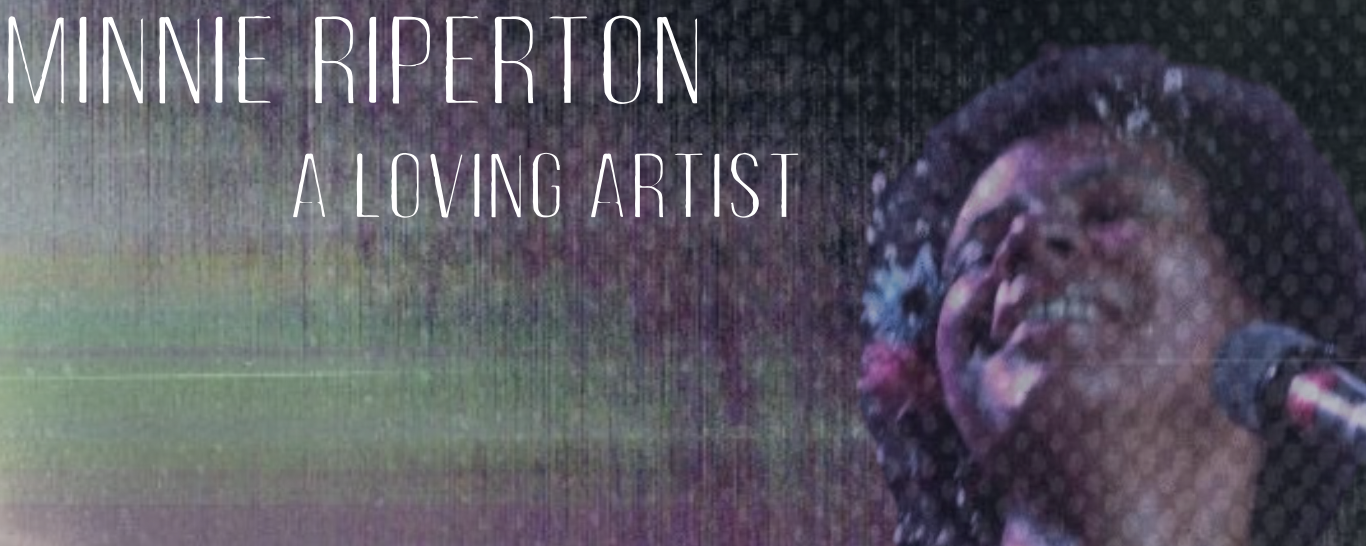
Design By Gabrielle Finucan
By Eleniz Cary
If soul music had a fairy godmother, it would be Minnie Julia Riperton-Rudolph. Born November 8, 1947, she was raised in the South Side of Chicago as the youngest of eight children. Riperton studied at Lincoln Center for the Performing Arts, taking classes in ballet, drama, and music, with aspirations of becoming an opera singer. Certainly, the skills she acquired from this era of her life only continued to refine as she grew older and found her own style of music.
Before releasing her own music, Riperton sang as a back-up vocalist and with bands. This is where she met Charles Stepney, a writer and music producer she would work with for the rest of her career. Other names behind the curtain include her husband, Richard Rudolph, and close friends, Stevie Wonder, George Benson, and Leon Ware. These legends are only a few lives Riperton impacted with her pure admiration for life and soul music.
First and foremost she was an artist and vocalist—a black woman whose voice was stronger than 100 men and lighter than a rose petal. Her debut solo album, Come To My Garden (1970), is reflective of this very notion. The opening track, “Les Fleurs,” showcases the effusive nature of her voice most notably. This is where she reimagines herself: “Will somebody wear me to the fair?/ Will a lady pin me in her hair?/ Will a child find me by a stream?/ Oh, kiss my petals, weave me through a dream.” It is a lyrical introduction to her personal philosophy which she wastes no time spreading. It’s a framework that supports ardent connections over all else: “Inside every man is the seed of a flower/ If he looks within, he finds beauty and power.” “Completeness” is an ode to the desire for another’s affection. Riperton puts her desperate longing on full display in a raw declaration, shamelessly owning her burning desires: “Be tender, my love, I need you, my love/ Live in rapture, loving, needing, teasing/ Pleasing, sharing, caring/ Waken me, my love, oh-oh/ Cherish me, my Love.” She delicately announces her lustful thirst on “Come To My Garden,” admitting she will “take your breath and give you [hers].” Riperton doesn’t just want to share a physical space, but a biological one. She begs to be submerged into another.
“Close Your Eyes And Remember” is like morphing into a single seed on a dandelion–dancing in the air, on a dark, warm summer night. You’re weightless and on a path determined by the flow of wind. “Memory Band” relocates listeners to a jazz club, where gold and red plaster the walls and Riperton looks just like she does on the album cover: standing serene in a floorlength white gown on mother nature’s steps. She’s the personification of organic creation, a dedication to the birth, life, and death of sultry serenity. Brass supports her rise and settlement at the song’s apex, sonically presenting lust as explicit and brazen. It’s obvious she has an affinity for string instruments, a perfect compliment to her voice. Contrasting the modernity of brass are harp scales and violins, easing Riperton into a dreamy landscape of luscious pleasure. The song is a theory about what the lovechild of jazz and soul would look and sound like, but is more so a reflection of a single motif spread across the album. That being the sensorial revolution onset by love—this is the central idea of her philosophical framework.
Perfect Angel (1974) is as sonically indulgent and sticky as the ice cream dripping all over her bare skin on the album’s cover. Riperton wears overalls and a smile, cluing listeners into the album’s theme: her sensual identity as a woman, wife, human, and mother. “Reasons,” the first track is a continued exploration of Riperton’s love-based philosophy: “The reasons for my life cannot be bought or sold/ But oh, the sweet delight to sing with all my might/ To spark the inner light of wonder burning bright/ You’re not alone.” As a singer, she can create spaces with intentions of nurturing a vulnerable and divine environment. She makes it clear that above all, she is a lover and an artist who strives to reconnect society, prevailing political conflict. The world she proposes is a dreamlike version of our turbulent reality. Riperton’s immense gratitude for the people she surrounds herself with becomes the focus in “It’s So Nice (To See Old Friends),” where she sings about the soul nourishment that is friendship: “It’s so nice to see you again/ Though the world be a little bit colder/ Still it’s fun, we should meet here again/ Stay a while, rest your head on my shoulder.”
Track seven, “Every Time He Comes Around,” bluntly, is all about sex: “I wanna be with him in the worst darn way/ ‘Cause everytime he comes around, I feel like I’m on fire/ When he whispers in my ear, I start to lose control.” An electric guitar coaxes listeners into submitting to Riperton’s siren song. It’s pleasantly suffocating and overwhelming. Riffs and scales reminiscent of Pink Floyd’s Dark Side of the Moon back Riperton’s enticing whistles. Track six, “Perfect Angel” is not about sex, but making love: “What we’re making is history/ Fooling impossibility/ Making love, not a fantasy/ Love is true, love is you.” This album is a far delve into her sexual being and still she refuses to stray from her theme of emotional intimacy. This effort to maintain a thematic balance comes from her struggle to differentiate lust from love: “It’s so hard for me to tell if this is just desire/ Or the love I need to make my spirit whole/ How am I to know?” One of her most well known songs is “Lovin’ You,” a sugary-sweet ballad that soundtracks an RKO production of Princess Aurora. It is a lullaby dedicated to her daughter, Maya Rudolph, who was just two years old at the time of release. The opening line would one day become her epitaph: “Lovin’ you is easy, ’cause you’re so beautiful.”
On the cover of Adventures In Paradise (1975), Riperton is casually splayed on a sofa chair, petting a calm lion which lies next to her. The wild animal, which was 100% real and almost attacked Riperton during the photoshoot, provides a stark contrast to the album’s delicate vocals. This image encapsulates her philosophy explicitly: admiration and intimate connections are the sources of her strength. An electric-blue wall fills most of the image, making Riperton, donning a cream satin dress, stand out so much more. The cherry on top is her iconic baby’s breath halo-crown, a graceful touch to her affectionate character. “Baby, This Love I have” is perfect for those who love to yearn and settle into the desperation of wanting. “Minnie’s Lament” stands out in the cold as a singular moment of sorrowful revelry. It makes sense as an introduction to “Love And Its Glory,” a song illustrating a teenage romance unapproved by parents. Once upon a time there was a young girl named Maya who fell in love with a poor boy named Aliya. After growing up, they planned to marry, but Maya’s father wanted her to marry a rich man. Crying at the altar was Maya before Aliya showed up and was brought to his knees. “Inside My Love” was banned in a few cities and many more radio stations outright refused to play the track due to the racy double entendres in her lyrics: “Will you come inside me?/ Do you wanna ride inside my love?” It’s a bit of an overreaction if one were to take a second look at what she is saying with the song in its entirety. Sure, it’s a tease up close, but Minnie invites listeners to insert themselves in her affectionate spirit and her way of existing. She genuinely and passionately invites everyone to take on her framework for life: Love.
The importance of love is what Riperton held onto throughout her battle with breast cancer. She received the diagnosis in January 1976, and just four months later, she had a double mastectomy. She faced the tragic reality that many black women in America are familiar with: a late diagnosis. By the time doctors caught her breast cancer, it had already spread. The surgery was traumatic and effectively did not save her life. At best it gave her an extension on the six-month timeline she received from doctors. Perhaps if she knew that she had a 41% higher chance of developing breast cancer than her white counterparts in America, she would have made an appointment and the cancer could have been stopped earlier on. Or maybe she wouldn’t have gotten cancer at all. Maybe it wouldn’t have mattered at all considering the same statistic stands forty years later. After Riperton’s 1976 diagnosis and subsequent surgery, she continued to tour, spreading her religion of love in light of her terminal condition. In her last few years, she educated the nation on breast cancer, later receiving the American Cancer Society’s Courage Award in 1978, presented by then president, Jimmy Carter. It was during the summer of 1979 that Minnie Ripterton stopped loving. On the morning of July 12, 1979, she passed in her husband’s arms, serenaded by Stevie Wonder on a private recording he made just for her.