
Ryan Beatty at House of Blues: Artist and Audience are One
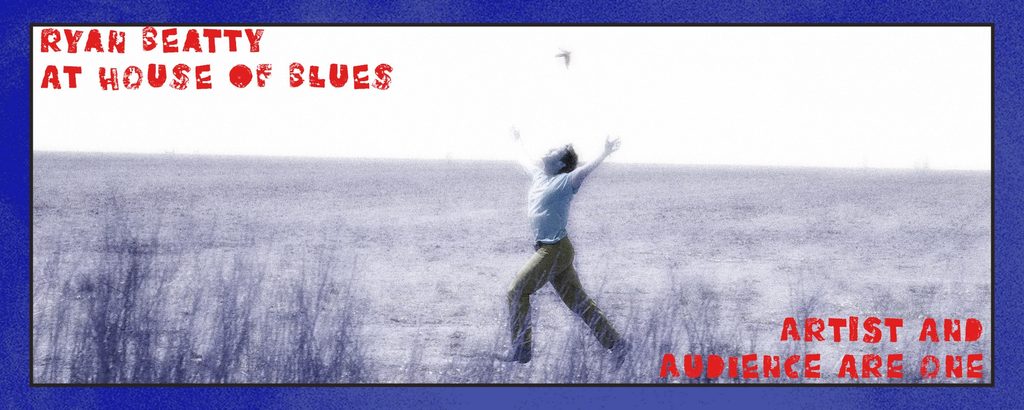
Design by Fiona Cunningham
By Addison Brewer-Hay
Citizens House of Blues Boston is a visually loud venue: covered in brown mosaic wallpaper, outsider art and framed mystical beasts, all supported by bright red pillars that surround the balcony levels.
Ryan Beatty’s stage displayed something different. Acoustic panels surrounded the wide array of instruments, positioned like a crescent moon around a grey fold up chair on the platform’s center. On the outskirts of the set, a fog machine covered the crowd in a thick haze, as if a blanket had fallen across the audience members. The set revealed something simple, a raw performance space that mirrored the atmosphere of a musician’s production process.
As the show’s opener girlsweetvoiced took the stage, the crowd was already packed. Girlsweetvoiced enchanted the room with a blue hue and softening tunes, the crowd watched intently, holding those they’ve come with close.
Taking the stage just after 9:00, Beatty opened his set with “Secret Language.” Throughout the performance, Beatty’s band members glided across their instruments, as if a spell possessed the room. The crowd swayed like trees in the breeze, singing the hits of his latest album, “Sweet Fortune” back to him.
Embracing happiness and sustainable love, “Sweet Fortune” features Beatty’s hits “White Lightning” and “Phantom,” dispersed among past hits like “Cinnamon Bread” and “Bright Red.” With every tune, the room’s brightness and color altered, resembling the song’s underlying moods and themes.
A standout example was during Beatty’s lyrics “driving with the headlights on” in his hit “Ribbons.” As his voice glided across notes, a spotlight appeared from the corner of the stage, mirroring a car driving outside the window. This very attention to stylistic detail represents Beatty’s strive to create a full artistic picture for his fans.
Extending their arms towards the stage, the crowd reached for Beatty. A blend of voices echoed off the walls, every pause lifted with a word of encouragement. The sound surrounded the audience, a symphony that united the space. Through background conversations and audience commotion, your eyes stay glued to the stage, as if the world had been paused by the simple click of a remote.
Beatty paced the platform, immersed in his music and emphasizing an intimate production of feeling rather than performing. His face altered with every word and every note. Behind him, the band stayed in a shadow, physically alluding to the seamlessness of their sound and how they intertwined together to create a unified melody.
Most notable about Beatty’s as a performer is his ability to make something so public feel so personal, breaking down the barrier between an audience and a musician. The intimate set design brings listeners into the mind of the artist, removing them from the House of Blues space and into Beatty’s music process. The audience is given this one on one experience with him, blocking out the noise of the bars and merchandise tables. His presentation makes you feel like no one else is there, an ability that many artists spend their entire careers dreaming to achieve.