
Fantasy & Fear on Simpleton by Kerrin Connolly
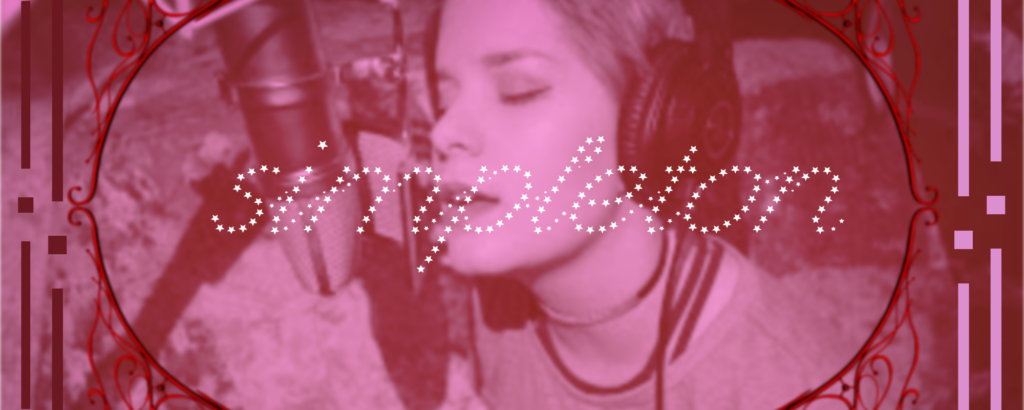
Design by Katie Lew
By Katie Lew
Kerrin Connolly is Boston-based artist who self-produced her third album Simpleton, which was released February 20, 2026. Each of her previous albums follows a whimsical outlook on life and mundane struggles in a distinct bedroom pop style, but this new album delves completely into the fantasy world through an alternative pop rock lens. Connolly’s most popular single “Fly in My Room” reached over 2 million streams after it was released in 2020, and was a personal favorite of mine throughout middle school. Since then, she has widely expanded her discography by experimenting with various genres and instrumentals.
“Try” and “Big Amygdala” set the tone for Simpleton with a fun 2000s pop rock style feeling heavily reminiscent of Paramore. Connolly’s vocals are comparable to a softer cross of Hayley Williams and early Lizzy McAlpine. Connolly structures the album to follow the “classic themes of a hero’s journey” where a call to adventure can be seen through the opening track “Try” with “There’s more to this, there’s gotta be/Am I someone I was meant to be” followed by “Mind the Gap” with “The greatest love of all/I’ll be the answer to your call/With every reason not to fall.” The lyrics on “Try” narrate a feeling of isolation under a traditional constricting power and ostracizing of peers saying “When the kids in the academy/ they sang my favorite song/ ‘There goes Simpleton’/ Why do I still sing along/ It feels like all I ever do is try, try, try.” They articulate constantly feeling behind, excluded, or estranged from the norm. Through “Quiet,” playful electronic elements are introduced, feeling like a blend of the spirited lyricism of a more mature Audrey Hobert with the production and melodies of Ricky Montgomery. “Funny” shifts into the tone of a taunting lullaby, as Connolly reflects on being exploited for her artistry throughout her music career saying, “Metaphors will make all your money/ I fit the form, so play me for a dummy.”
Connolly builds on the album’s emotional weight on the slow rock of “Avalanche.” The strong sustained and distorted guitar instrumental quickly stands out. Throughout the album, there is recurring natural symbolism in relation to their mental health struggles and restrictions. In “Avalanche” she says, “The seeds you’ve sewn here will never know new life,” then in “Flowers Pt. 2” sings “Oh, lay down all your flowers for the mouse/ Not the first to be punished for finding out/ Pity the baby’s out of breath.” These lyrics echo the album cover art of a rat eating its own tail—reminiscent of the ancient Ouroboros symbol representing the cycle of constant rebirth and death leading into one another. “How Easy It Is” returns to a slower sway before being struck by the heavy rock of “He Doesn’t Die in the End” and “The End.” Both tracks lean heavily into the fantasy narrative and recount a hero’s loyalty and perseverance through hardship. “Simple” concludes the album like the feeling of coming down from a battle with its strong guitar riffs balanced atop soft piano melodies. Throughout each verse on Simpleton, Connolly’s grief and isolation shifts and evolves as it does on “Simple”, where she sings “I grieve in circles/ I dream in circles/ I believe in circles” which again relates back to the beautiful album cover done by John Green showing the nonlinear emotional patterns that cycle and evolve.
Simpleton blends various alternative genres and displays Connolly’s musical progress, while still maintaining her personal flair for lighthearted melodies that rests gracefully upon heavier instrumentals. “Quiet” and “Avalanche” greatly stand out for their unique composition, on top of dynamic backing tracks. Connolly’s self-produced Simpleton is full of beautifully complimentary harmonies and lyrical turns, creating a deeply layered, but fun album that tackles grief, mental health, and heroic conquests with ease.