
Tinashe Has Something To Prove on “Popstar”
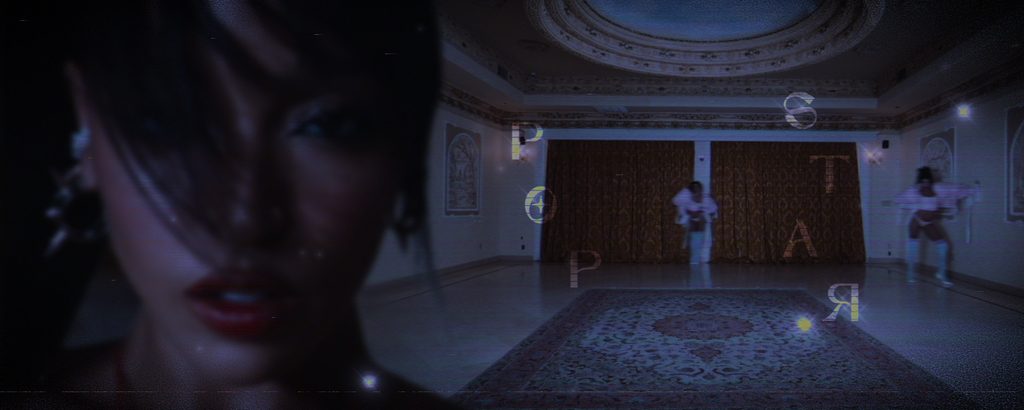
Design by Diego Gonzalez
By Bennett Himmel
Since the beginning of her career, the California-based, genre-defying R&B/pop artist Tinashe has always been something of an underdog. Sure, she’s had hits. You’d be hard-pressed to find any self-respecting gay guy who doesn’t put on “2 On” or the “All Hands On Deck” music video at the pregame. Her music has always gone deeper than party tracks, though. Her debut album, 2014’s Aquarius has been a mainstay of mine for the past year or two; its sonically varies nature makes it all the more appealing to me. There’s the bubblegummy “Pretend” featuring A$AP Rocky, but also the psychedelic, bizarre “Bet,” which features an insane guitar solo from Dev Hynes. It felt like a pop record that was meant to completely reshape the genre. So what happened?
Tinashe made the grave mistake of being signed to RCA Records, who desperately craved mainstream success for her; “Watch out Beyoncé, here comes Tinashe!” read an early ELLE headline. Despite the critical acclaim for Aquarius, the rollout for her second album Joyride (2018) was marked by endless stops and starts, to the point where she released the fantastic Nightride (2016) mixtape just so that she could put something out. By the time Joyride got released, it was an overly-meddled-with, underwhelming, commercial mess that made people wonder if Tinashe was even worth the trouble. Then she broke free from RCA.
Since the second Tinashe got out of that contract, she’s been on a roll. Her albums Songs For You (2019) and 333 (2022) are masterful, experimental pieces of R&B and pop, although they each felt disjointed in their own way, yet again caught between the mainstream and the underground. On a planned trilogy of EP’s, BB/Angel and Quantum Baby, Tinashe deepened her sound, bringing in producers like Machinedrum to really do some weird shit, even if those EP’s resulted in commercial hits like “Nasty” and “No Broke Boys.”
That trilogy never got completed, and so last week we were treated with Popstar, Tinashe’s eighth studio album. I was locked in from the second the singles came out, if a little bit concerned that the success of the “No Broke Boys” remix had led Tinashe fully into the club. I’ve always loved Tinashe most when she’s delved deep into R&B, like when she talks her shit all over Nightride’s “Lucid Dreaming,” or BB/Angel’s sultry “Uh Huh,” but the pop tracks on this album are undeniable. “Too Easy” is a banger, if overly short, but it’s impossible to deny how, well, easy it is for Tinashe to write a hook: “Hunnid freaky girls up in the spot…tonight/T-twist it up and drop it like it’s hot…tonight!” Tinashe chants, her inflection pinging around like the chattiest girl at the party; you can practically see her jaw swinging about. “Melatonin” is stunning, a ghettotech electro track unlike anything Tinashe’s ever released before. The refrain, “You so melatonin,” has immediately become a fixture in my vocabulary, a nonsensical phrase of which the meaning is abundantly clear. I love it.
The deeper cuts are fantastic too; you really get the sense that Tinashe was in the fucking zone when she made this record. There was some discourse shortly before the album came out about the seemingly low-effort album cover: a selfie of Tinashe wearing office-siren by way of Sailor Moon glasses and big, chunky studio headphones, with (barely visible) stars edited into her irises. Many said that they preferred the alternate covers that Tinashe has been selling, where she looks gorgeous doing glamorous activities: sitting on a rooftop, sitting in a bath, sitting in a car smoking a blunt with a Big Hat. Tinashe batted back that the main cover is the most intentional and representative of the album, that an album cover is about more than a pretty picture, and despite me being an initial skeptic, she’s right! I can imagine a dazed, locked-in Tinashe staring at her computer while writing out the melodies to the Nine Inch Nails-meets-Jason Aldean bro-country of “Nobody Wanna Dance Anymore” (which interpolates that one Wale song where Gaga was all up in M.I.A’s nachos,) or the aquatic ambience of “Brainrot,” a song so delightfully frantic and catchy that it makes being called “Brainrot” work.
Much of the album takes on a shuffling, hazy, druggy quality that lends itself to rides home from the club, the afters, or solo, headphones-on late night listens. The opener “Sunglasses” is masterful because Tinashe somehow completely slides over an Arca and Machinedrum beat that sounds like it could’ve been on one of Arca’s early mixtapes. The song isn’t quite structureless, more like it has about three structures at once. “Flashbacks” is a delight, featuring an impish, horny Tinashe prattling about “runnin’ butt naked ‘round the house” over an insistent piano instrumental. “Twentyfive Eight” is a gym-ready midtempo thumper about commitment to oneself, with wistful and funny lyrics like “If you win the rat race and come in first place, then you’re still a rat.”
Then there’s the glowing centerpiece of the album, “I’d Rather Be Alone,” a song that immediately places itself in the pantheon of great R&B power ballads, invoking Rihanna’s “Kiss It Better” or Kelela’s “Better.” Tinashe tells the story of a crumbling relationship in a vague but universal way over soaring guitars and misty synths, lamenting the way things can just end, holding her chin up even if she knows she’s gonna cry for a bit.
Tinashe has always cared about the integrity of the form of the album. Each Tinashe album is painstakingly sequenced, with dips in energy and emotion placed perfectly, taking the listener on a journey. It wasn’t until Popstar, though, that Tinashe completely nailed down her sound, effortlessly mixing the commercial with the experimental. On “Empty Stadiums,” Tinashe laments that she doesn’t want to “die underrated.” Popstar proves that she doesn’t have to worry about that.