
We Used To Stay Up All Night: A Reevaluation of Uffie’s “Sex Dreams and Denim Jeans”
Every Sunday, milk crate revisits an iconic piece of music history—artist, album, or otherwise—as a part of our weekly crate digging series.
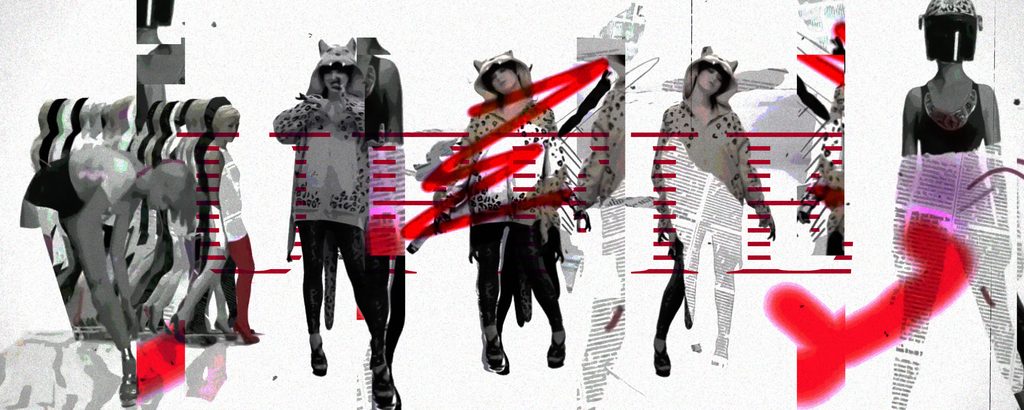
Design by Diego Gonzalez
By Bennett Himmel
Take a moment to think about the kind of music played at the pregame versus the music that gets played at the afters. Before going out, you circle up with your friends and chant lyrics about sex and drugs and general bad-bitchery while chugging down malt liquor that tastes like watermelon Jolly Ranchers and regret. But when you get home from the party, you sit in the living room, watching the sun peek through the blinds, smoking and talking and lounging until you pass out, while faint house grooves and siren-like vocals swirl around in the background. Both types of music serve an incredibly utilitarian purpose; they are there to transport you to the feeling, to set the mood, to make your life feel like a movie.
“MC am I, people call me Uff, when I rock the party, you bust a nut,” chanted an 18- year-old American girl in Paris in a delightfully obnoxious British accent, under the influence of what can only be assumed to be gallons of the aforementioned malt liquor.
That song, 2006’s “Pop The Glock,” was the first time Anna-Catherine Hartley, better known as Uffie, got behind a mic, at the request of her boyfriend, French producer Feadz. The song was released on the trendy French electro label Ed Banger, immediately capturing the attention of party teens everywhere.
She continued to release singles like “Hot Chick” and “Ready to Uff,” but her career seemed to stall. The music journalism world didn’t know what to make of Uffie—it was a very misogynistic time for music and the world did not take kindly to pop music, especially not the kind in which white girls talk-rap.
Of course, by 2010, white girls talk-rapping was all the rage. Kesha had a Billboard Hot 100 #1 hit with “TiK ToK,” a pregame song that remains relevant to this very day. While Kesha’s debut album Animal (2010) was taking the world by storm, Uffie’s debut album, Sex Dreams and Denim Jeans (2010), an arguably much better talk-rap album, was quietly released and shamed by the press, leading Uffie down the road of an endless tour and a nearly-ten-year break. So what went wrong?
“She did not know how to rap or sing,” Ed Banger founder Pierre “Busy P” Winter told SPIN Magazine in 2016. “Feadz was a real musical conductor for her. He used her voice as an instrument. It makes it unique. I immediately wanted to sign it on the label.”
This feels like a reductive way to describe Uffie’s sound. Yes, there was a certain gimmick to her image and music: Here’s this rebellious, young, and beautiful American girl sent to live with her father in Paris after a vandalism arrest, and she’s brat-rapping over electro beats. The misogynistic hate comments practically write themselves. But Uffie’s presence on the mic is not to be ignored. On the boisterous single “MCs Can Kiss,” Uffie chants, “Four to the floor you can kiss my ass / I’m the least working girl in showbusin-ass!” and somehow sells it with full confidence and puckish joy.
Uffie’s work ethic and the question of whether or not she’s a “real artist” colors the lyrics of many tracks on Sex Dreams and Denim Jeans. Deepcut “Our Song” features the heaviest autotune we hear on the album; the opening lyrics are, “We need to clarify a few things / I never claimed to be an artist / I can’t even sing, you know?” The verses are stream-of-consciousness, devoid of reason as Uffie autotune-wails about the exhausting tour life, about heavy drinking, about just wanting cash, until the autotune drops out for the final sigh of, “It sometimes feels like I’m for saaaaaaaaaaale.” It’s spellbinding and disarming; the most human emotions on this record are delivered completely robotically.
Sex Dreams and Denim Jeans continues to surprise throughout its second act. “First Love” is probably my favorite Uffie song ever, and one of the saddest love songs I’ve ever heard. The track looks back on her relationships, knowing that things ended for the best while still mourning what she once had. The beat is deliciously misty and melancholic, and it wouldn’t be a stretch to say that the entire cloud rap genre wouldn’t exist without this very song. It’s a complete triumph. The title track is also fascinating, built around a sample of The Velvet Underground’s “Rock and Roll,” telling the story of a failed relationship over rollicking guitars. It’s unfortunate, though, that she had to give up all her writing credits for the song to the notoriously cankerous Lou Reed, who got all the royalties.
Speaking of writing credits, there’s an elephant in the room that needs addressing: Uffie is not credited as a writer on the majority of the album’s tracks. She even went on record to SPIN Magazine saying, “I was crying, gagging in my mouth when I used to record. There was nothing organic or natural about it. It was just so stressful. It wasn’t fun.”
Busy P described Uffie’s working relationship with Feadz as strained, comparing them to Ike and Tina. This knowledge can taint the listening experience a bit—how can you enjoy an album that you know was made under duress, that the artist doesn’t even enjoy?
The album was received incredibly poorly by critics: A zero from NME, a two from Anthony Fantano. The touring life was also incredibly difficult for Uffie: “Eventually I was like, ‘I will not survive this. This isn’t okay. It’s not worth [losing] me as a person.’ I just became a shell.”
The six-year tour eventually came to an end when Uffie found out her mother was dying of cancer, she told SPIN Magazine, and Uffie faded into obscurity for a while. There’s no denying the contradictions of this album, but I find that some of its thrills are too delightful to ignore.
How can someone hear the gnarly Miami bass of “Brand New Car” and not involuntarily twerk? How can someone hear Pharrell’s verse on “ADD SUV” and not absolutely lose their mind? And how can you hear a song like “Pop The Glock” and not want to listen to it with friends? The first half of the album is pregame music, while the second is full of ruminations on fame and lost love.
Uffie received a lot of hate simply for existing with this album, but in recent years it’s undergone something of a reexamination. Charli xcx has called it one of her favorite albums of all time, and Uffie even did what she thought she’d never do: return to the music industry at the start of this decade. (Her most recent album, Sunshine Factory (2022) is a fun listen!) Sex Dreams and Denim Jeans is full of contradictions. So is life.