Album Review

  • Motion City Soundtrack’s Midwest Love Affair

    There is something so infinitely personal about Commit This to Memory and Justin Pierre’s writing is so powerful that it still makes it relatable. It’s much more than just a record, also a change of pace for Pierre as a man and Motion City Soundtrack as a band with every member taking care of their own parts, the band sounds much more full from the very first note they all play together.

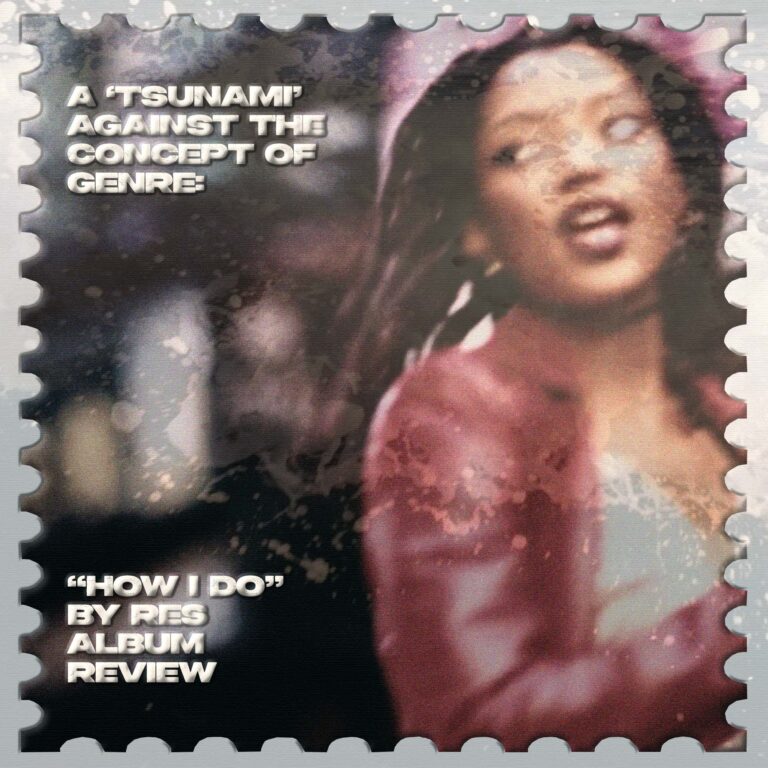
  • A Tsunami Against the Concept of Genre: “How I Do” By Res

    Every Sunday, milk crate revisits an iconic piece of music history—artist, album, or otherwise—as a part of our weekly crate digging series. Design by Sophie Parrish BY: GABRIELLE FINUCAN  I find myself with an earworm carrying its way through my body on a consistent basis. At my part-time job, I hum to myself a snippet…

  • Music, Fashion, Film is Antagonistic and Brilliant

    Music, Fashion, Film, is many things. It’s her funniest album. It’s sneakily catchy and some of the more simplistic lyrics can come off quite wise. The shift to guitars and rock music is done in a fascinating way; this is certainly not your typical 2020’s pop-punk revivalism. Charli’s dabbled in rock on her sophomore album, the sometimes delightful, sometimes downright interminable Sucker, and it’s done much more gracefully and fittingly here.  But there’s also the fact that it begs the listener not to like it. Charli has a habit in interviews lately where she basically says that the album is ironic, but it isn’t, but it is, but it’s not.  Don’t get me wrong, the album is certainly well-made and enjoyable, but is impossible to divorce from her larger-than-life persona. So much of the album, as with Brat, feels buried in the marketing, and as a longtime fan, after two extremely emotional, vulnerable, image-focused records, it’s hard not to want songs about going fast in cars again. But Music, Fashion, Film is here, and it’s a true conversation starter. The most polarizing things can sometimes last forever.


  • Summer of Self-Hatred: A Teens of Denial 10-Year Retrospective

    Design by Sophie Parrish By Declan Ireland It’s 2016 and you’re young—somehow younger than you already are. Everything has this heightened breathing quality, so much so that it takes on an awful animism. The world, your friends, your lover: all of it is powerful and wrong. Except you, my young friend, you have the distinct…

  • This Is A Dangerous Place: King Crimson’s Discipline

    King Crimson’s 1981 endeavor of a concept Discipline was an entire shift for their career. Five years after Red and eleven after The Court of the Crimson King, King Crimson take on a completely new sound in the ’80s, one that is much more melody-based than their earlier work, which relies heavily on creating an ambient and droning atmosphere along with volume dynamics between members. Their older work is more resemblant of bands such as Yes and Can. They also had a bigger line up in their earlier formations, with both woodwind and string instruments. In the 1980s, King Crimson was exclusively a quartet that lasted through Discipline, Beat (1982), and Three of a Perfect Pair (1984). They leaned into the likes of Talking Heads and even groups like Gang of Four. Across their discography, songs follow a regular verse and chorus structure, maintaining their Crimsonian weirdness through the usage of time signature changes and polymetric modulation. Discipline marked new territory for King Crimson, and by the end of the album they already had perfected it.