
Crate Digging

  • Summer of Self-Hatred: A Teens of Denial 10-Year Retrospective

    Design by Sophie Parrish By Declan Ireland It’s 2016 and you’re young—somehow younger than you already are. Everything has this heightened breathing quality, so much so that it takes on an awful animism. The world, your friends, your lover: all of it is powerful and wrong. Except you, my young friend, you have the distinct…


  • This Is A Dangerous Place: King Crimson’s Discipline

    King Crimson’s 1981 endeavor of a concept Discipline was an entire shift for their career. Five years after Red and eleven after The Court of the Crimson King, King Crimson take on a completely new sound in the ’80s, one that is much more melody-based than their earlier work, which relies heavily on creating an ambient and droning atmosphere along with volume dynamics between members. Their older work is more resemblant of bands such as Yes and Can. They also had a bigger line up in their earlier formations, with both woodwind and string instruments. In the 1980s, King Crimson was exclusively a quartet that lasted through Discipline, Beat (1982), and Three of a Perfect Pair (1984). They leaned into the likes of Talking Heads and even groups like Gang of Four. Across their discography, songs follow a regular verse and chorus structure, maintaining their Crimsonian weirdness through the usage of time signature changes and polymetric modulation. Discipline marked new territory for King Crimson, and by the end of the album they already had perfected it.

  • Sezen Aksu: Git and a Legacy of Turkish Pop

    I first heard Sezen Aksu in the back of my mom’s minivan. Her song, “Değer Mi,” would play each time someone turned on the CD player, a glittery, synth-heavy pop song with a repeated hook: “Değer mi hiç, Değer mi hiç, Değer mi hiç,” which asks “is it worth it, is it worth it, is it worth it?” As a child, I sang along as best I phonetically could, without knowing how to speak Turkish. I sounded something like “dare me,” an Americanized take on Aksu’s lyricism. It wasn’t until I revisited the album in my junior year of high school that I began to uncover the true meaning of Aksu’s lyrics and see her music as more than just an old song still stuck in my head a decade later.

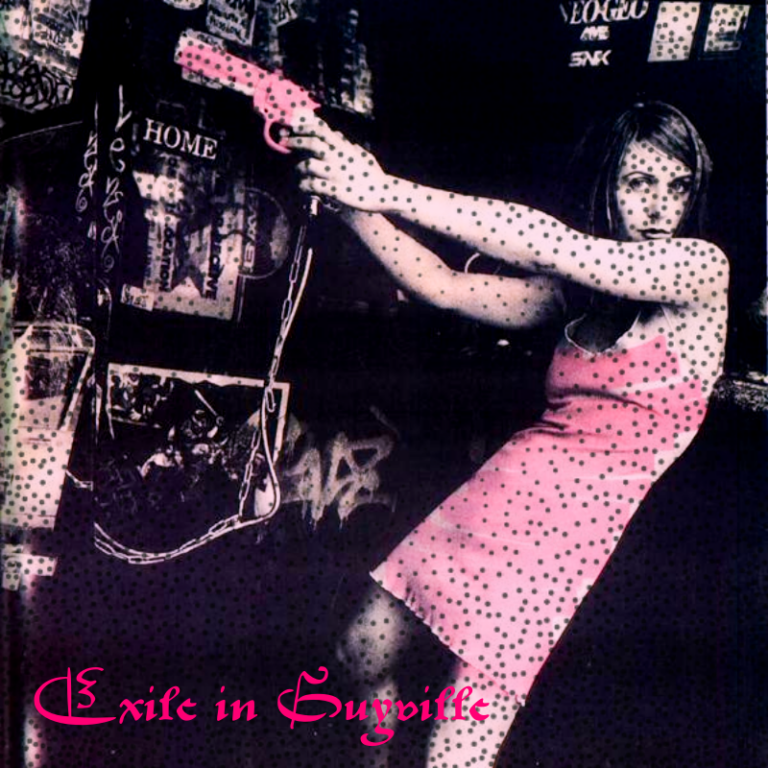
  • Life Still Feels like Exile in Guyville

    Exile in Guyville could be a sob story about shitty ex-boyfriends and childhood trauma and bad sex, but Phair doesn’t sing it like she wants your sympathy, or even like she’s particularly upset over the situation. It sounds like she’s resigned herself to it. It’s the tone of voice of a breakup that you’ve known is coming for months, the end of a relationship that you’ve already mourned the loss of by the time the conversation happens, the numbness that comes with deciding not to expect too much. Her vocals are devoid of any flourish or technical stylings, but are instead a monotone that sounds like she’s complaining to you over the phone.

  • Still All Fucked Up: 20 Years of Eiafuawn’s Birds in the Ground

    Unlike the steady and booming resurgence of Duster within the past years, Eiafuawn has seen little resurrection outside of smaller spaces. On February 25, 2022, archival record label The Numero Group released deluxe pressings of Birds in the Ground, as well as full Spotify and Bandcamp uploads. But the area that Eiafuawn finds itself in doesn’t need to be large, and the album doesn’t need a cultural revival. It only needs to play in quiet bedrooms and turned-up headphones, existing in the personal and authentic world it cultivates for each listener. 20 years later, Eiafuawn stands as a meaningful record of early 2000s slacker artistry—gloomy and detached yet oh so emotional. Maybe in our own interior worlds, everything is still all fucked up, but in Parton’s world of Birds in the Ground, everything is right.

  • Paavoharju, Yhä Hämärää, and the Enticing Charm of the Unknown and the Unseen

    Everything about the Savonlinna-born group’s ethos and aesthetic is drawn from the esoteric, from their uncanny, unexplainable album covers to the magical, free-form quality of their music, which can veer from weightless ambient ballads to chip-tuned psychedelic folk to full-on electronic club-thumpers with minimal downtime. The group often sounds like they’re tethered between this reality and the next, making music that appeals as much faeries as it does to regular human beings — not to mention that nearly every picture of the band looks like it could have — or may have — been taken in a dilapidated woodshed in the dead-center of Lapland.

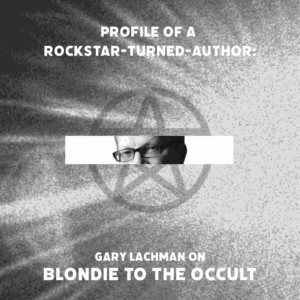
  • Profile of a Rockstar-Turned-Author: Gary Lachman on Blondie to the Occult

    When Gary “Valentine” Lachman departed punk-rock group Blondie in 1977, he had no plan for what lay ahead. Since then, Lachman has formed his band The Know, toured with Iggy Pop, earned a philosophy degree from California State University, managed the famous new-age bookshop Bodhi Tree Bookstore, relocated to London, been inducted into the Rock & Roll Hall of Fame as part of Blondie’s lineup, and written 26 books—about consciousness, his time with Blondie, the occult, and other fascinations.